Agentic Workflows: From Tools to Teammates in the Enterprise
The Shift from Automation to Agency
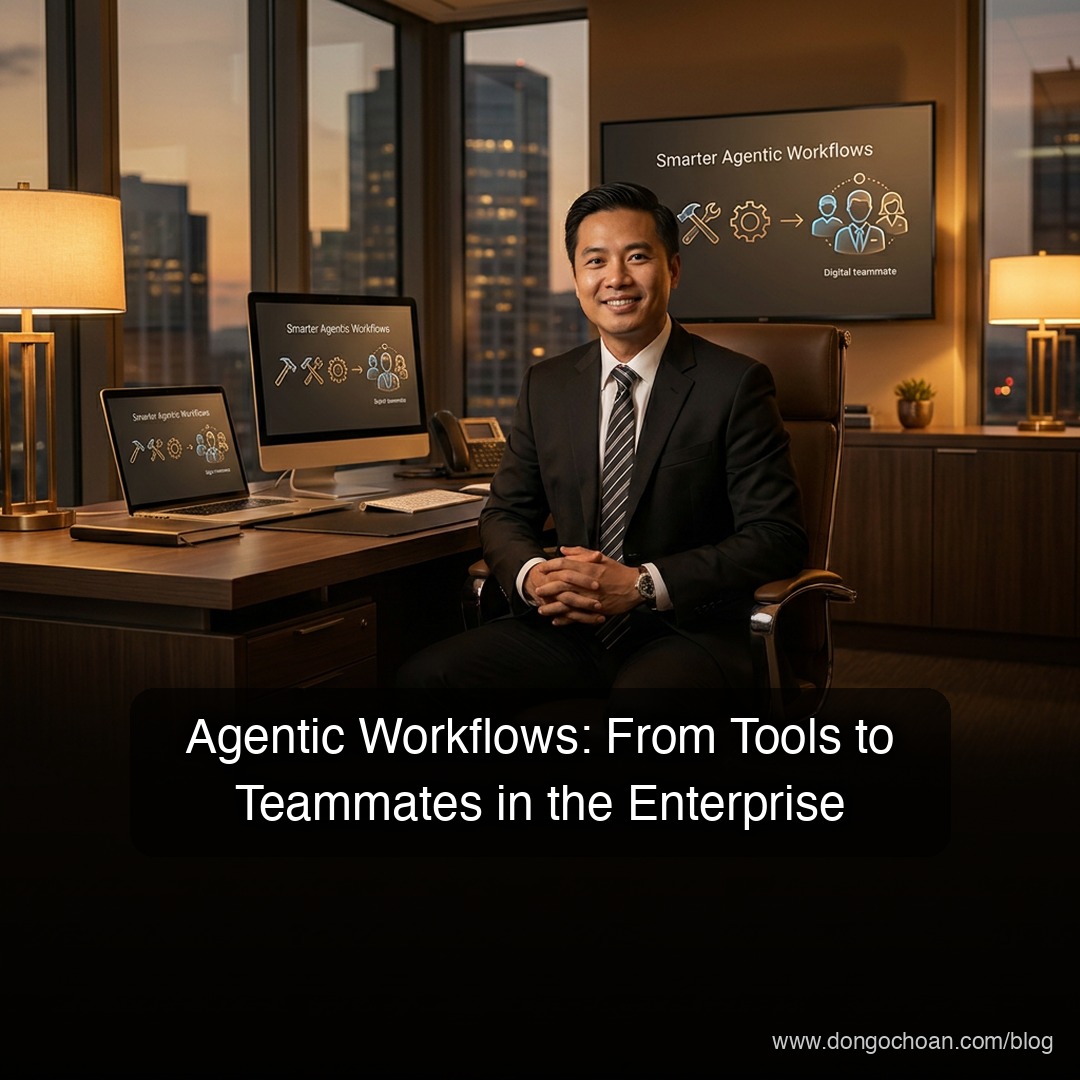
In the next era of enterprise AI, we are witnessing a fundamental transformation: the shift from viewing AI as a command-driven tool (Automation) to embracing it as a "digital teammate" (Agency). The report "Agentic Workflows: From Tools to Teammates" highlights how AI is evolving beyond mere task execution to become an entity capable of understanding goals and functioning autonomously.
1. Defining Agentic Workflows
The primary distinction lies in how work is orchestrated:
- •Traditional Workflows: Humans perform the operations, and the system executes predefined logic.
- •Agentic Workflows: Humans define the Goal, while the AI autonomously decomposes that goal into tasks, plans the execution, coordinates with other systems, and—most importantly—adapts to context on the fly.
This power is built on four core pillars: autonomy, context awareness, multi-agent orchestration, and continuous learning.
2. Organizational Impact and the Evolving CIO Role
This shift delivers immense measurable benefits:
- •40% Reduction in Cognitive Load: AI handles repetitive analytical and decision-making tasks.
- •60–80% Shorter Processing Cycles: Particularly evident in complex processes like contract management.
Consequently, the role of the CIO (Chief Information Officer) is changing. They are no longer just managers of hardware and software; they are becoming "Intellectual Architects." Their mission is to design AI operating models, manage algorithmic risk, and build the data and security foundations required to support a hybrid workforce of humans and digital teammates.

Hoan Do
Founder at Wizy Marketing Agency. Passionate about helping Vietnamese businesses in North America scale with modern technology and premium marketing strategies.
Learn more about us →