Codex 5.6 Sol vs Terra vs Luna: Picking the Right Model for Every Task
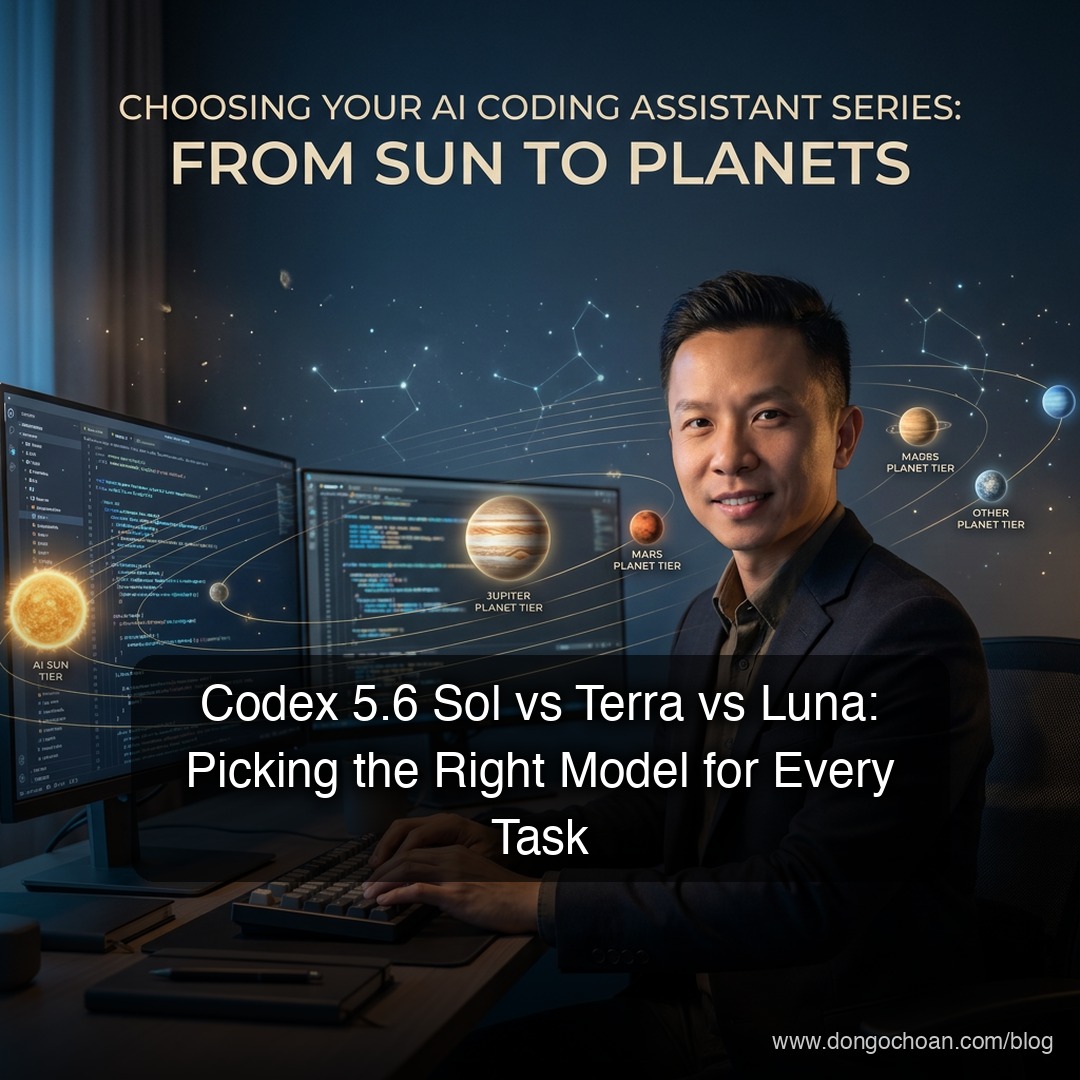
OpenAI's Codex now ships five model tiers, and the naming has quietly shifted away from plain version numbers toward names borrowed from the solar system — Sol, Terra, Luna. If you're picking a default model for a real project instead of just accepting whatever's selected, here's the actual difference between each tier and when to reach for it.
What are Codex's Sol, Terra, and Luna models?
They're three tiers of the same 5.6 generation, split by depth of reasoning versus speed:
- •5.6 Sol — the flagship, tuned for the hardest agentic coding work.
- •5.6 Terra — the balanced workhorse for everyday coding.
- •5.6 Luna — the fast, cheap tier for lightweight, repetitive tasks.
Alongside them sit two older options still worth knowing: 5.5, the previous stable generation, and 5.3 Codex Spark, a tier built specifically for rapid-fire quick fixes.
When should I use Codex 5.6 Sol?
Sol is the model to reach for when the cost of being wrong is high. It's built for deep reasoning and system-level debugging, and it can read and reason across a large repository's full structure without losing context along the way. Reach for it when you're architecting an application from scratch, tracking down a hard logic bug, or running a long autonomous agent chain where accuracy matters more than speed. The trade-off is response time — Sol thinks longer to get it right.
When should I use Codex 5.6 Terra?
Terra is the default for day-to-day coding. It responds faster than Sol while keeping strong reasoning quality, and it handles the bulk of routine work smoothly — writing functions, refactoring, generating test scripts. If you're not sure which model to pick for a normal feature or bug fix, Terra is the safe everyday choice.

Hoan Do
Founder at Wizy Marketing Agency. Passionate about helping Vietnamese businesses in North America scale with modern technology and premium marketing strategies.
Learn more about us →