8.2: What Marketing Does a Vietnamese-Owned Shop in Ontario Need? A 6-Stage Map from Google Maps to AI
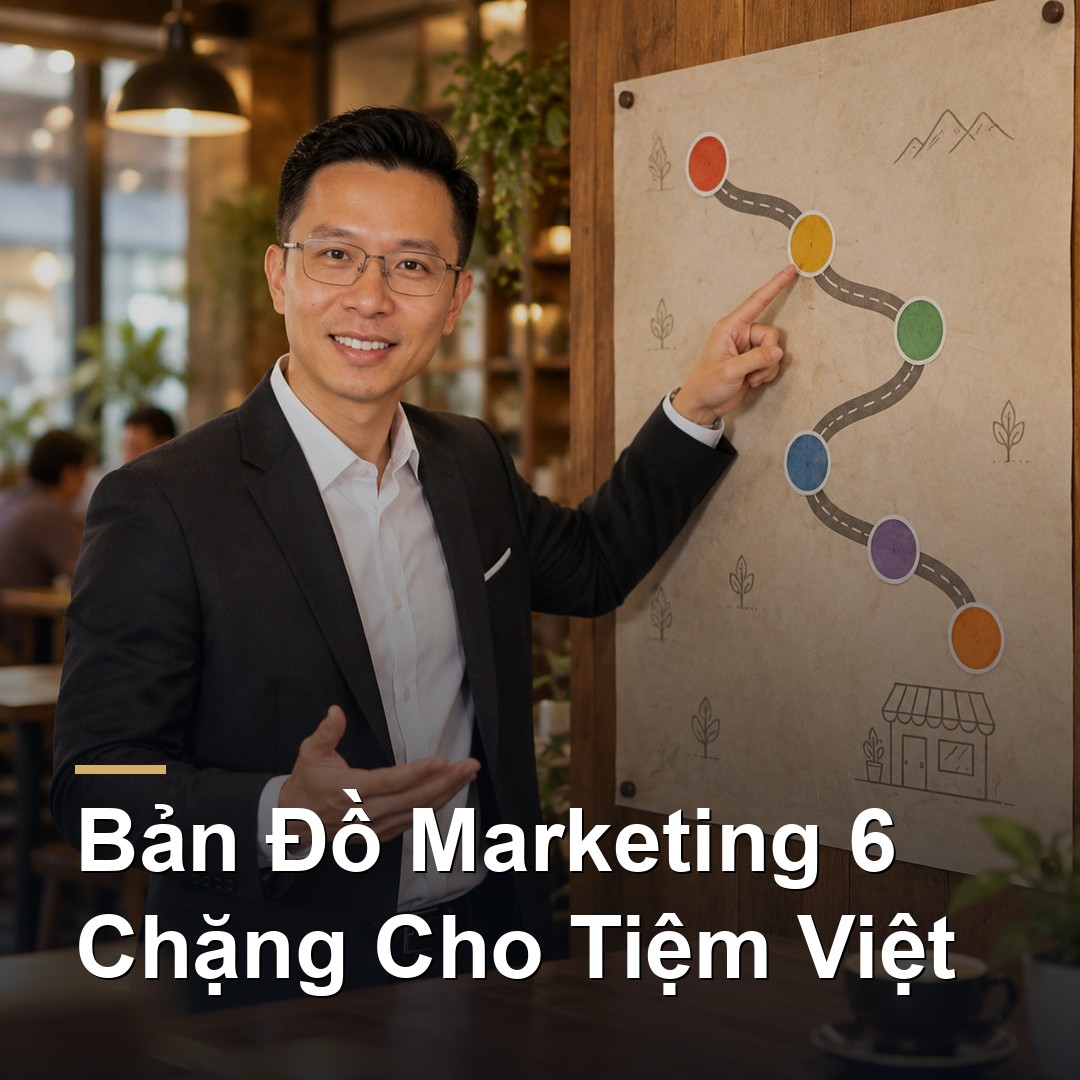
A Vietnamese-owned shop in Ontario should do its marketing in six stages, in order: Google Maps first, then social media, reviews, ads, a CRM, and finally AI. Getting the order wrong, like running ads while your Google Maps profile is empty, is the fastest way to waste money.
Owners often ask me: "What should I do first?" Good question. Marketing has too many moving parts, and everyone says theirs is the most important.
This post is a map. It shows which stage your shop is at and what comes next.
Think of it as building a house
- •Google Maps is the foundation.
- •Social media is the walls and the paint.
- •Reviews are the neighbours saying nice things about your place.
- •Ads are the big sign out on the road.
- •A CRM is the guest book.
- •AI is the helper who never sleeps.
Put up a huge sign in front of a house with no foundation and visitors won't stay.
Stage 1: Google Maps — so customers can find you
Goal: when someone types "nail salon near me" or "pho nearby", your shop shows up.
It comes first because people searching Google Maps need something right now. They aren't browsing. They're looking for somewhere to go.
What to do:
- •Claim your Google Business Profile.
- •Fill in hours, services, phone number and real photos.
- •Post updates regularly.
You're done when: searching your trade plus your area shows your shop with complete, correct details.
Stage 2: Social media — so customers recognize you
Goal: someone who taps through to your Facebook or Instagram sees a place that's active, attractive and trustworthy.
After finding you on Google, people often check your social pages before deciding. A page untouched for three months gives them pause.
What to do:
- •Post 2–3 times a week with real photos of your shop.
- •Add one or two short videos a week.
- •Answer comments and messages the same day.
You're done when: a stranger can tell within 10 seconds what you do, where you are and how to book.
Stage 3: Reviews — so customers trust you
Goal: plenty of real, recent reviews, each with a thoughtful reply.
People trust other customers more than they trust what a shop says about itself. In our community, word of mouth carries even more weight.
What to do:
- •Ask right after a customer is happy, with a QR code or a text.
- •Reply to every review, including the less positive ones.
- •Never buy fake reviews.
You're done when: new reviews arrive every month and none go unanswered.
Stage 4: Ads — to speed things up
Goal: reach more people, faster, in a way you can measure.
Run ads only after the first three stages are solid. Ads bring people to the door. If the house isn't ready, they leave, and you've still paid.
What to do:
- •Start small: one platform, one clear goal (bookings, for example).
- •Target the right radius around your shop.
- •Track how many calls, messages and bookings come from ads.
You're done when: you can answer "how much does each new customer from ads cost me?"
Stage 5: CRM — to keep customers
Goal: someone who came once comes back a second and third time.
A CRM, put simply, is a regulars notebook that reminds you what to do. Finding a new customer always costs more than keeping one, so this is the stage that thickens your profit.
What to do:
- •Record name, phone, visit date and service.
- •Send appointment reminders automatically.
- •Message customers who haven't been back in a while.
You're done when: you know how many past customers returned this month and who hasn't visited lately.
Stage 6: AI — to lighten the load
Goal: repetitive work happens automatically, even while you're closed.
AI can answer midnight messages, take bookings and remind customers. But it's only strong when it has the data from stage 5. Without a customer record, AI just gives generic answers.
What to do:
- •Let AI handle repeat questions: prices, hours, address.
- •Connect it to your calendar and CRM.
- •Always keep a human reviewing.
You're done when: after-hours messages still get answered and no booking slips through.
Score yourself: which stage are you at?
Answer "yes" or "not yet" for each:
| Stage | Question | Yes / Not yet |
|---|---|---|
| 1 | Does your shop appear when you search your trade + area on Google Maps? | |
| 2 | Has your social page had a new post in the last two weeks? | |
| 3 | Did you get new reviews this month, and reply to all of them? | |
| 4 | Do you know how many customers your ads bring in? | |
| 5 | Do you have a customer list and know who hasn't been back? | |
| 6 | Do messages sent while you're closed get answered? |
The first "not yet" from the top is what to work on next. Don't skip ahead.
Quick recap
- •Six stages: Google Maps → Social → Reviews → Ads → CRM → AI.
- •Order matters. Foundation first, signage later.
- •Each stage has a clear "done" signal.
- •Your next job is the first stage that's still "not yet".
Next up (8.3): what six months of doing all six stages looks like, month by month.
You can walk each stage yourself, and this blog has a series for every one. If you'd rather have one team handle all six at once, that's The Wizy Stack. Not sure where you are on the map? Book a free 15-minute consultation.
✍️ About the author: Do Ngoc Hoan Founder of Wizy.ca, a marketing agency for Vietnamese businesses in Ontario. I write to make marketing simple for busy shop owners — no confusing jargon. More at dongochoan.com.
Frequently Asked Questions
What marketing should a new shop do first?+
Google Maps. People searching there need a service right now, so it's the foundation. Claim your Google Business Profile, fill in correct hours, services and phone number, and add real photos. Social media, reviews and then ads come after.
When should a shop start running ads?+
Once your Google Maps profile is complete, your social pages are active and you have real reviews. Ads bring people to the door; if they find an empty profile or few reviews they leave and the money is still spent. Start small, on one platform, with one clear goal such as bookings.
What are the six marketing stages for a local shop?+
In order: Google Maps so customers can find you, social media so they recognize you, reviews so they trust you, ads to speed things up, a CRM to bring customers back, and AI to automate repetitive work. Your next job is the first stage you haven't completed.
Related Posts


✉️ Subscribe to our newsletter
Marketing tips, AI news, and growth strategies for your business — straight to your inbox.